
Expand Your Moral Circle
Why every sentient being matters

1 The forgotten trillions
A suspicious yet widespread belief: almost all of what we should be concerned with is present people in our own society. This should set off alarm bells, like an ancient monarch thinking that almost all of what mattered in the world was what happened to his family or Joseph Smith’s claim that God cares deeply about Joseph Smith getting to have a bunch of underage wives. Our moral circle is restricted, meaning we ignore most sentient beings on Earth. This is a colossal error. All sentient beings matter.
Farm animals are the clearest example of sentient beings we ignore. Almost all farm animals undergo brief, hellish lives in factory farms. If you subjected a dog to these conditions, you’d be jailed for animal abuse. If you inflicted them on a person, you would be jailed for torture.
They are mutilated without anesthetic: debeaked, dehorned, and castrated. On average, egg-laying hens have their bones broken three times over the course of their lives. They live in cages too small to turn around. Chickens sold for meat are selectively bred to be so hideously large they can barely move.
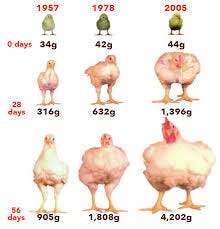
One report estimated how much time these animals spend in disabling pain—pain so intense that when you undergo it, you can’t think about anything else. This is the most intense pain most humans undergo in their lives—accompanying a surgery or childbirth. Animals spend about an hour a day in disabling pain, akin to having to give birth every single day.
Even further from our moral circle are wild animals. Most have very short lives that end in starvation, being eaten alive, or dying of disease. Conscious wild animals are far more abundant than both people and farm animals. It could very well be that in a week, both the joys and miseries in nature outweigh all the joy and misery experienced by humans ever in history.
Then there are the future generations who could be more numerous still. Nearly everyone who will live throughout history will live in the far future. Because digital minds could be proliferated in vast numbers, compared to expected digital welfare, non-digital welfare is a rounding error. According to one estimate, digital minds could be a quadrillion times more numerous than humans.
Thus, the most numerous sentient beings’ interests aren’t counted at all. If this is an error, then it is a colossal error, akin to thinking that only five humans on Earth matter, rather than that all humans do. If all sentient beings matter, this demands a profound moral revolution.
2 Why be a sentientist?
Here is a first reason I think that all sentient beings matter: when I think about what’s bad for humans, it seems bad for other sentient beings too. Consider some painful experience like having a headache, being kicked in the balls, or being punched in the head. Undeniably, part of what makes this bad is how it feels.
Sure, maybe being kicked in the balls is bad for other reasons. Perhaps it makes it harder to complete important projects—if you’re reading an article, and someone kicks you in the balls, it will make it harder to keep reading. But a big part of why intense pain is bad is because it hurts. It’s bad in part because it feels bad. If I was going to be slowly transformed into a pig, and then kicked in the balls, I’d still regard that as very bad.
We have lots of excuses for caring minimally about animal suffering. We claim animals matter much less because they aren’t smart and aren’t members of our species. But none of those things make a decisive difference to the badness of their pain. When you are kicked in the balls you don’t lament “ah no, this is terrible wholly due to my sapience and the fact that I’m a member of a sapient species.” No, you lament being kicked in the balls because it hurts.
But many of the sufferings animals undergo—being eaten alive, starving to death, being castrated with no anesthetic—are significantly worse than being kicked in the balls. All across Earth, sentient beings in numbers too vast to count are undergoing horrendous suffering that is far more intense than the most intense suffering you’ve ever experienced. If your pain matters because it hurts, theirs does too.
There’s so much animal pain in the world that if its intrinsic badness compares to that of human pain, then total animal pain is much worse than total human pain. This is a startling fact: think about the badness of you hurting, dial up the intensity, multiply by something like a quadrillion, and you have the badness of global animal pain.
Pick any trait that you think means we don’t have to care much about some non-humans’ interests. Now imagine a human with that trait. If you’re being consistent, you have to say the human wouldn’t matter either. But in most cases, this is obviously absurd and evil.
Animals don’t matter much because they’re not smart? Human babies and the severely mentally disabled aren’t very smart either. Their interests still matter. You might be tempted to say that babies will become smart later, which is why they matter, but this implies that terminally ill babies don’t matter. Remember this: the animals we gas and lock in cages by the billions are psychologically like some humans.
They don’t matter because they’re not human? Well, if a DNA test was done, and it turned out that some class of apparent humans weren’t really human, we’d still think they mattered. So species can’t make a decisive moral difference. That they’re not smart and not our species shouldn’t make a difference either, because if we discovered that certain apparent humans who were mentally disabled weren’t really human, they’d still matter.
And note: none of the excuses for neglecting the interests of animals apply to digital minds. The digital minds of the future could be much smarter than us. The fact that they’re made out of silicon doesn’t affect their moral importance.
One way to see how much pigs matter: imagine that you would slowly turn into a pig. And no, that isn’t impossible. If you can very slowly transform from a baby into an old man, you can slowly turn into a pig too. Once you’d reached your pig state, if it was still really you, it would be a big deal whether your interests were counted. If pig you was painfully gassed to death (as most pigs in the UK are), that would be a huge deal.
The principle of empathy is that you’re supposed to imagine things from the perspective of others. When we do this for animals, it’s obvious that they matter a great deal. The core idea of sentientism is that you should care about everyone whose interests would matter to you if you lived their life.
3 The view from nowhere
Along these lines, it can be helpful to think about evaluating problems from behind a veil of ignorance. This idea, popularized by John Rawls, is that if you want to figure out what a just society looks like, imagine what society you’d want to live in if you didn’t know who you’d be. You’d oppose slavery and oppression, for fear that you’d be the person enslaved or oppressed.
Behind the veil of ignorance you’d be overwhelmingly likelier to be an animal than a human. You’d thus care overwhelmingly about animals. Every one of the things people make fun of utilitarians and vegans for caring about, you would care about from behind a veil of ignorance. If the animals could speak for themselves, they’d make vegans seem like wishy-washy moderates.
Similarly, Andy Weir has a cool story called The Egg. The premise: you are everyone. You live the life of every sentient being in the world. Thus, you spend way more time as a farmed animal than a person, and way more time as a wild animal even than that. If the future goes well, all of that would be drowned out and subsumed by the vast ocean of future lives. In the egg scenario, obviously animal welfare would be hugely important—more important, even, than human welfare. So would ensuring that the far future goes well.
The veil of ignorance and egg thoughts experiments are helpful for letting us see what’s most important. A slave owner in 1830 could, by consulting the egg scenario, have come to see that slavery was evil. No sane person would approve of slavery if they have to live the lives of every slave.
When we ignore what we’d care most about if we experienced every perspective, we too are acting immorally. Such a global perspective captures everything in the world that impartially matters. If our actual perspective differs from this ideal perspective, then our actual perspective is blind to much of what matters. Maybe morality isn’t only about producing what’s impartially most important, but that’s surely a big part of it!
4 Human blindspots
There is an obvious evolutionary debunking of the non-sentientist’s error. Our moral norms evolved, in large part, to facilitate cooperation with other people. Caring about non-humans wasn’t adaptive, so evolution left us blind to their moral importance.
One last reason to be a sentientist: every past society in history did lots of evil things. But their errors resemble what we do when we neglect large numbers of conscious beings. As Evan Williams put it:
I think it is probable that we have serious blind spots. After all, just about every other society in history has had them. Show me one society, other than our own, that did not engage in systematic and oppressive discrimination on the basis of race, gender, religion, parentage, or other irrelevancy, that did not launch unnecessary wars or generally treat foreigners as a resource to be mercilessly exploited, and that did not sanction the torturing of criminals, witnesses, and/or POWs as a matter of course.
The main reason they went wrong was that their moral circle was too limited, excluding slaves, foreigners, and women. Torment was inflicted at a massive scale because the perpetrators didn’t care about the victims. A restricted moral circle caused most of history’s greatest evils. Had the Nazis’ moral circle included Jews, the holocaust would have been impossible.
If we notice that every society in history has erred in some direction, then we should worry that we err similarly—especially if those errors enabled their worst crimes. If everything that we say in defense of some practice could have been said in defense of past atrocities, that should set off alarm bells. We neglect the welfare of animals because it’s intuitive. But to the Nazis, neglect of Jews was intuitive—to ancient barbarians who raped and slaughtered innocent foreigners, the unimportance of the foreigners was intuitively obvious. Failing to care about others is a ubiquitous human failure mode.
You might worry that this goes too far. Should we care about rocks and plants and chairs on this ground? No, but the reason we shouldn’t isn’t because we arbitrarily discount their interests. It’s because they have no interests. Nothing can go well or badly for a rock in any important sense. Not so for pigs and chickens and cows. If you’d be turned into a rock, you wouldn’t care about what happened to the rock afterwards. If you’d be turned into a pig, you would care about what happened to the pig afterwards. Behind the veil of ignorance, even if you could somehow end up a plant, you still wouldn’t care at all about plant welfare.1 You would care about pig welfare.
Sentientism would have prevented the gravest historical injustices. Where it diverges from our present practices, we should suspect our present practices are rooted in ill-conceived prejudice. In the past, people went along with slavery and oppression because it was all they ever knew—it was societally approved of and they never properly scrutinized it. We should worry that we are like the slavers of the past, blind to our crimes.
If you don’t want to be like evildoers of the past, if you want to be the kind of person who would have opposed slavery even when it was popular, you must scrutinize your own society’s practices. So when our society ignores most conscious beings, and even goes so far as to torture billions of them in ignoble windowless gulags, we should expect that we are like the Nazis, and slave owners, and conquerors. You don’t have to wonder how you’d behave if your society was engaged in horrendous atrocity. The answer is: however you behave now.
You might object that this doesn’t make any sense to imagine. But even if things are strictly impossible, they can be imagined. Maybe it’s impossible for you to be someone else, but you can imagine things from their perspective. Similarly, it’s often thought that we are numerically identical to early non-conscious fetuses. So if that’s imaginable, then surely being identical with a plant is imaginable, even if strictly impossible.
You write a lot about farm animal suffering, but what is your view on wild animal suffering? As in, what we should about it
the egg reference!