
Read This Book
80,000 hours has a new book, innovatively named "80,000 hours." You should probably read it.

People generally go about career planning irrationally.
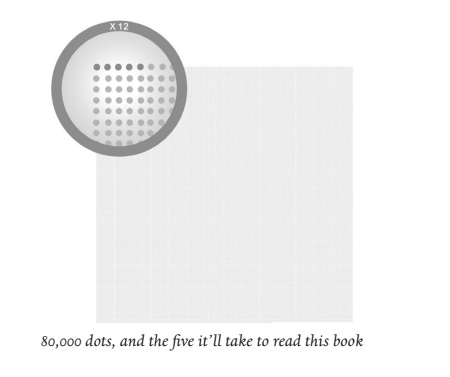
You have about 80,000 hours in your career. So if spending 80 hours on career planning would increase career productivity by a measly .2%, it would be worth it. And yet despite this, most people spend almost no time doing serious career planning. They’ll think hard about how to get particular jobs, but they spend little time seriously investigating what they should be aiming at with their career. This would be a bit like if you were attending a month-long trip, but only spent five seconds planning it.
80,000 Hours (the group) aims to change this. They recently released a book, called 80,000 Hours (very original name, I wonder how they came up with it). You can buy a physical copy on Amazon or read online the career guide here. If you’re not sure what to do with your career, I recommend reading the book. It provides extremely useful advice about what kind of career you should get, backed by about a decade of high-quality research. Given how little time it takes to read a book compared to the amount of time in your career, reading the book has enormous expected value.
Most career planning advice is not very good. Instead of being well-evidenced and quantitative, it’s generally a mishmash of the random spare thoughts that the person who wrote the book has had about careers over the course of decades. Going with the random evidence-free guesses of people writing books with titles like “How I Got My Dream Job and Started Living My Truth,” is not the way you should make important decisions.
80,000 Hours aims to do career planning differently. They compiled about 10 years of research into a career guide that’s both comprehensive and readable. Over 3,000 people say they’ve changed their careers as a result of 80,000 Hours’ advice.
The book contains a ton of useful career-planning information. I can’t hope to discuss it all. But I’ll describe the book’s advice on a few of the biggest questions, to help you get a sense of which things you should shoot for in your career.
First, the big question: how do you pick a career that you’ll like?
The standard advice is that you should follow your passion. The big problem with this advice is that it’s wrong, and a secondary problem is that it’s bad. Even if you are passionate about philosophy, there’s little guarantee that you’ll like the day-to-day life of being a professor, full of administrative meetings, teaching students who don’t care about the subject matter, and only a bit of time discussing philosophy.
Empirically, people aren’t very good at guessing which jobs they’ll enjoy. This is not a matter on which you should go with your gut. Instead, one should consult research about the most enjoyable jobs. There are five big factors that tend to make a job enjoyable:
Engaging work: the ideal job isn’t too easy, so that it becomes tedious, nor too difficult.
Helpful work: people are happier doing meaningful work that helps others.
Work you’re good at: excellence is its own reward. If you’re better at a job, you’ll tend to enjoy it more.
Supportive colleagues: enjoyment of work depends a lot on how much you like your colleagues. So get a job with good colleagues.
Meeting basic needs: ideally your job will pay enough so that you’re not struggling financially, nor will you have a super long commute.
Summed up in one sentence:
Rather than ‘follow your passion’, our slogan for a fulfilling career is: get good at something that helps others. Or more simply: do what matters.

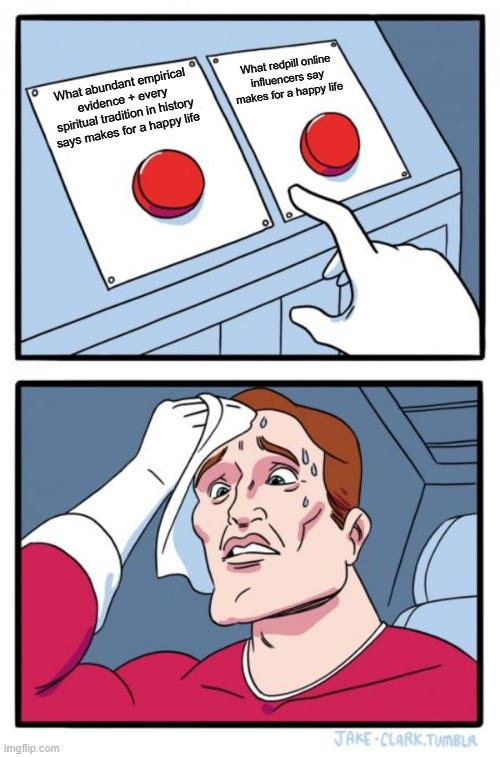
Lots of people try hard to get jobs that make loads of money. But money doesn’t correlate very much with happiness. So this shouldn’t be what you aim at in a career, in general.
If you’re interested in doing lots of good with your career, what jobs should you aim for?
One obvious answer for lots of people is to earn to give—making lots of money in order to give it away. If you make $300,000 a year and give away half, you’ll save about 30 lives every single year. That’s a crazy amount of good. You can be more prolific than any serial killer in history, but in the opposite direction.
However, 80,000 Hours’ guess is that this generally isn’t the highest impact thing to do.
Advocacy jobs can often be even higher impact. By changing the minds of multiple people, you can do more good than if you’d simply done good things on your own. Dwarkesh Patel, by being a good podcaster, is able to influence huge swaths of the tech world, including many of the world’s most influential people. 80,000 Hours writes:
We’d love to see more people become journalists or take other jobs in the media, but we’d also love to see people starting Substacks or podcasts about neglected topics.
So true!
Research is also very high impact. Many of the most impactful people in history had an impact by doing research. Borlaug saved millions of lives by optimizing wheat yields. The most important ideas all came from somewhere, and by doing impactful research, you can be one of the people producing those ideas. A huge amount of research progress comes from the best researchers—so this is an especially impactful thing to do if you are at the top of your field.
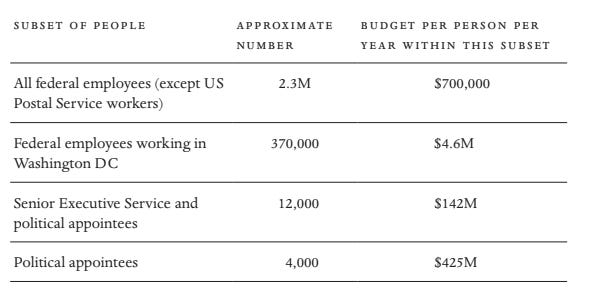
Government jobs can have a huge impact as well. Government workers often have enormous budgets that they direct. Even slightly improving how a large budget is spent is enormously impactful. Changing policy is often necessary for solving major problems like AI risk and factory farming.
Given how influential government and research jobs are, other jobs that influence research and government are often impactful too. By working for a think-tank, you can help shape national policy in important areas. Along these lines, being an academic administrator who helps facilitate impactful research can be good too (though just being a bog standard academic administrator is likely not very impactful, just as researching random unimportant questions is generally not very impactful).
But how, practically, should you go about career planning? It’s important to build career capital—developing skills and a resume that makes you more valuable to future employers. Most of your career impact will come later in life, so you should think hard about which careers will let you be impactful later. This isn’t just because a larger total share of your career is spent later in life, but also because people’s performance tends to increase—especially after spending a very long time judiciously practicing a craft:
The study of expert performance was pioneered by late Swedish psychologist K. Anders Ericsson. After thirty years of research, he concluded: ‘I have never found a convincing case for anyone developing extraordinary abilities without intense, extended practice.’ For Mozart to succeed so young, he needed to start young. Mozart’s father was a famous music teacher and trained him intensely from the time he was a toddler.
You shouldn’t lock in too early. People generally aren’t very good at knowing which jobs they like best or will be most impactful. Bouncing around, especially when you’re young, is generally a good thing, so long as you don’t foreclose future careers. In general, people are too risk averse and biased by the status quo when deciding on jobs:
A large study found good evidence in support of this idea. Freakonomics author Steven Levitt recruited tens of thousands of participants who said they were deeply unsure about whether to make a big change in their life, such as leaving a job or relationship. After offering some advice on how to make hard choices, those who remained undecided were told to flip a coin to settle the issue – 22,500 did so. Levitt followed up with these participants two and six months later to ask whether they had actually made the change, and how happy they were now on a scale of 1 to 10. It turned out that people who made a change in an important area of their life gained 2.2 points of happiness out of 10 – a larger boost than the typical gain from getting married, or even coming out of a period of depression. The result suggests a simple rule of thumb: if you’re feeling on the fence about your current path and doing something else, it’s probably time to quit.
When planning a career, people generally think too narrowly. Often the best career for you is one you haven’t thought of. So when doing career planning, try to consider a bunch of careers. Then try to gather concrete, high-quality information about them. People often go with their gut when deciding on careers, but this tends not to be very reliable. Signals from your gut are often crap.
While general guesses about how much you’ll like a career don’t work very well, grading potential careers on specific criteria works better. When deciding between different jobs you should ask: does this build career capital? How much immediate impact does this have? How well-suited am I specifically for it? Might this open up a longer-term career path?
Then, you should try to investigate. If you’re thinking of being an academic in economics, start reading an econ textbook. If you’re thinking of becoming a journalist, start a blog. You should make an ABZ plan. Plan A is the job you most want, plan B is a fallback, and plan Z is what job you’ll get if things go really badly.
When trying to get a job, you should do a lot of networking and apply to a ton of jobs. The odds of landing any particular job are low, so send out your resume to many people.
The book discusses many other themes in considerable detail—how to network, which jobs are the least likely to be displaced by AI, which kinds of skills are useful across jobs. For any topic you can think of related to career planning, probably there is a chapter discussing it, that looks at high-quality evidence on the subject, rather than naive guesses. It also discusses which cause areas are impactful (hitting on the main EA priorities) and how you can make a big impact no matter what your career is (e.g. giving some of your money to effective charities).
Taking a career is one of the biggest decisions that you’ll make in your life. It affects how you’ll spend tens of thousands of hours. Some careers are much higher impact than others, and some you’ll enjoy much more than others. An important choice like this merits serious and careful consideration. Unless you already are relatively certain as to your career path, it makes sense to read the most up-to-date research bearing on the question of which job to take—and thus makes sense to read 80,000 Hours.
Thank
Having read the book, one thing that I’ll say is that if you’ve already done the 80,000 Hours online career guide, you won’t get a ton extra out of the book. It has more citations, slightly more anecdotes, and a larger section on various risks from AI, but overall, I would say that if you’ve done the old online version, you get 93% of the content and 95% of the important advice from just the career guide. There is, however, a newer section on which skills AI is unlikely to automate.
Still, buying the book this week is good if you want to help get it on a Bestseller list. If you think more people should read it, that’s a good reason to buy.