
Life and Death
What life's sanctity demands

1
Márgarét, áre you gríeving
Over Goldengrove unleaving?
Leáves like the things of man, you
With your fresh thoughts care for, can you?
The philosopher Aaron Smuts died at the age of 46, on March 23, 2022. The Oxford Handbook on the philosophy of love, which Aaron coedited, reads:
Aaron Smuts wished to dedicate this handbook to Heidi Bollich with the note: “For Heidi, I wish I could have grown old with you.”
In many situations, when we hear and think of death, it appears just as a word. We don’t adequately reflect on the profound horror—on the person who is no longer there. But on certain occasions, our vision clears and we begin to see death as it really is. We can adequately grasp the horror of people dying, even those we don’t know and will never know. We begin to appreciate, at a deeper level, the unbounded awfulness whereby one fewer person is left in the world.
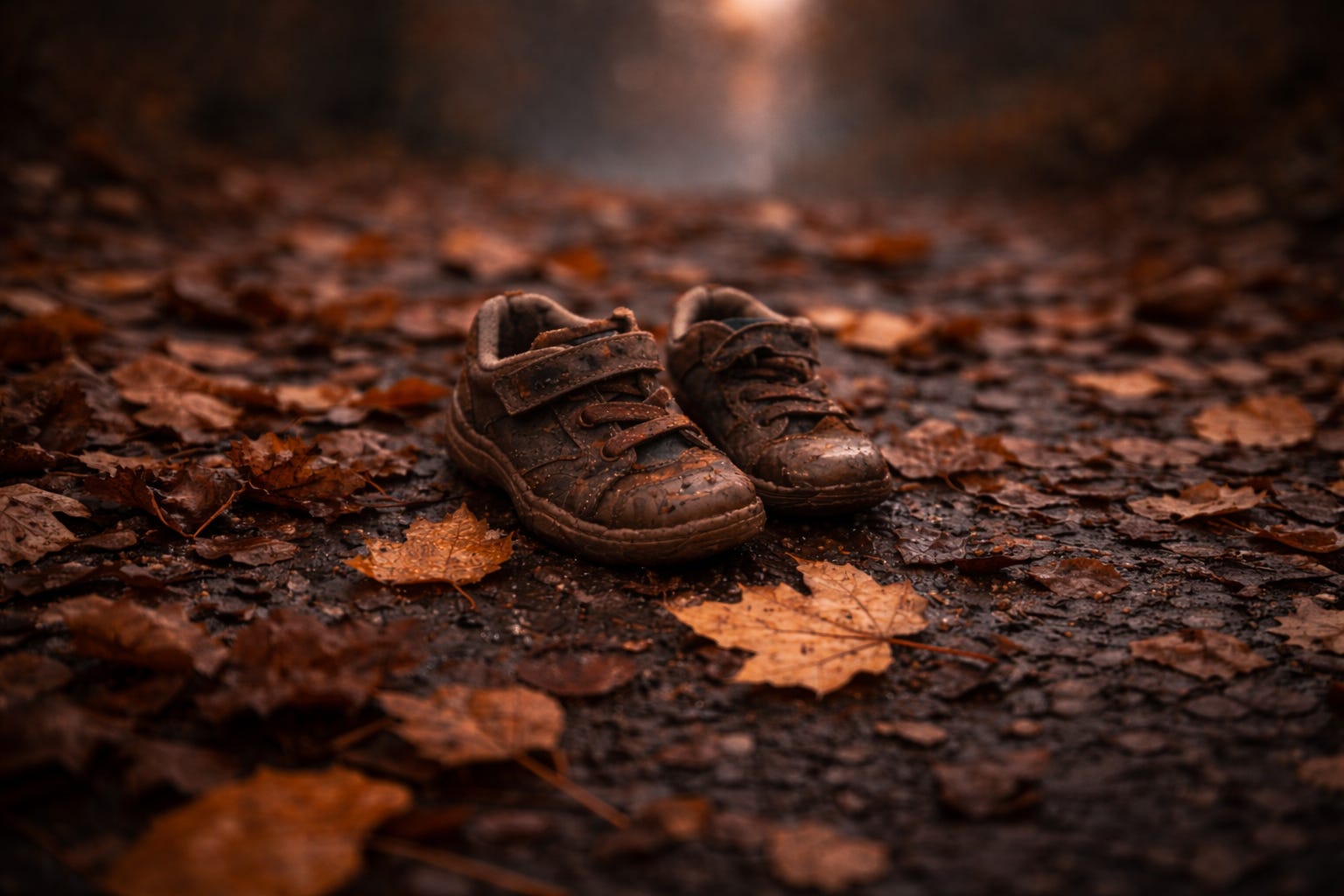
There are other things that occasion this kind of realization. One feels it when one reads a tombstone at a graveyard and sees the number of years that the deceased lived numbered in the single digits. For me the thing that does it most reliably is reading about the death of young children. This series of poems, for example:
An Angel in the Book of Life
“An angel in the book of life wrote down my baby’s birth.
Then whispered as she closed the book “too beautiful for earth”.
And:
Those we have Held
Those we have held in our arms for a little while,
We hold in our hearts forever.
2
Ah! ás the heart grows older
It will come to such sights colder
By and by, nor spare a sigh
Though worlds of wanwood leafmeal lie;
Every day, about 13,000 children under five die of preventable causes. That’s about one every six seconds. This tragedy—too horrific to vividly contemplate for very long—occurs every six seconds. That is a fact that we seldom grapple with adequately. We’d do well to think more about the fact that the death of children is a routine occurrence.
I was recently watching videos of me, my brother, and my cousin when we were toddlers. There were videos of me explaining that I can’t say astronaut because I was “too little to say astronaut,” of my little cousin watching dazedly as my brother and I energetically bounced around, and of my brother building a Knex roller coaster. Watching it, I was briefly struck by the horrifying fact that every few seconds, babies at roughly the age we were in the videos die in excruciating agony and terror. And that most people do virtually nothing to stop it.
If we grappled with the horror of death more deeply, it would change a great deal about our behavior. The clearest example concerns charitable giving. It is quite cheap to save lives. It costs only a few thousand dollars to save someone’s life if you give your money to the most effective charities. This means that if you earn the median income in the U.S. and give away 10% of it, you will save someone’s life every year.
Every year, one fewer child will be ripped from the world because of you. Each year, one fewer parent will have to bury a child. One more child will get to grow up. One fewer child will be taken from its parents’ arms, only to live on forever in their heart. If we can prevent something that dreadful from occurring at comparatively minor cost, we ought to do so, just as we’d be obligated to pull a child from a pond.
3
And yet you wíll weep and know why.
Now no matter, child, the name:
Sórrow’s spríngs áre the same.
Nor mouth had, no nor mind, expressed
What heart heard of, ghost guessed:
It ís the blight man was born for,
It is Margaret you mourn for.
I heard someone recently suggest that the United States only has an obligation to its own. This arose in the context of a political debate; he suggested that shutting down foreign aid was desirable because it does not benefit Americans.
For what it’s worth, I disagree with his claim about foreign aid’s effects on Americans. I think that we are better off because we provide foreign aid. But far more wrong-headed seemed to be the moral principle. It seemed to be one that one could only maintain by steadfastly refusing to think vividly about the badness of death.
When one imagines whole graveyards full of children under five—hundreds of thousands or millions—that would result from the destruction of foreign aid, would that really be worth it? Are the lives of foreigners so valueless that America hasn’t any duty to prevent them from dying, even if they are children? Back in the day, there was endless talk of the sanctity of life. The claim that we have no duties to those outside the U.S. seems to me to fail to grapple with the sanctity of life. If one thinks about their own loved ones, it seems obvious that their lives matter more than a few thousand dollars of taxpayer expenditure.
Death, like most of the world’s evils, is easier to glimpse when it is nearer to you. It is very easy to intuitively appreciate the horror of a loved one dying. It is much more difficult to appreciate the horror of a poor foreigner dying whose name you will never know.
Yet though you will never know their name or see their face, they have a name and a face and a family. They have people who love them, people who will mourn for them, people who will, on the eve of their death, think about them until the very end. Everyone who dies is as human as you or I or our loved ones.
There’s a paraphrase from Augustine: “God loves each of us as if there was only one of us.” Whether or not one believes in God, this describes the disposition that we should adopt. We should strive not to see those we can affect as part of some amorphous homogenous mass of foreigners, but instead as individuals who we care about as we would if they were the only people we could help. A person’s value isn’t diminished by being a member of a large group—each child who dies of malaria is just as precious as the children who do not.
People often think it’s crass to talk about the horror of death and then in the same sentence suggest people donate their money. But I don’t think this is right. It is because of the horror of death that we ought to give our money to prevent it. It is because life is such a precious thing that we should do everything in our power to prevent it from being snuffed out. To call this crass is like calling it crass to discuss the horror of fire when explaining the necessity of firefighters. Instead it would be crass to talk about death’s evil without acknowledging that we are mostly in a position to do something profound to limit its scope.
There are times when one does not live up to the demands of a feeling they have. The person who feels guilty over their misconduct but continues doing it doesn’t live up to the demands of their guilt. The person who feels boundless and overflowing love towards another, but never shows it, does not live up to the demands of their love.
Taking seriously death’s evil should beget action, not idle mourning. Every day graveyards fill up with the bodies of children less than a meter long. We ought to do significantly more to prevent this, and if prevailing cultural norms tell us otherwise, it is the norms that must change. That we can prevent children from dying regularly seems like one of the most profound and important facts about our world, and it is a fact that we would all do well to grapple with more. To the extent that we wish to live up to the demands of the sadness we feel in the face of death, we all have a duty to do significantly more.
I agree that all these bad things are bad and that charity is a good way to alleviate it. But aren't you supposed to believe in an eternal heaven for everyone? How can you then think the premature death of a child is bad and morally urgent if you don't think the child died at all actually, but went to an infinitely better place where it will remain forever?
As an atheist, yes. But why would a religious person who believes in a great afterlife believe death is a horrible thing for a person? It should be a blessing.