


Do I have autism? In my life, there are two main camps on the autism question: those who are very confident that I have it and those who are very confident I don’t have it.
In the pro-camp is a plurality of my friends. Two of my friends, both of whom have been diagnosed with autism, have, on separate occasions, said I am “significantly more autistic” than they are. Another friend claimed my autism is a Moorean fact—something so obvious that he’d hold to it even in the face of strong contrary evidence.
In the anti-camp are some other of my friends and all of my immediate family. My mother is particularly confident in the falsity of the hypothesis. When I was young, I met none of the diagnostic tests for autism—I had none of the usual traits of autistic children. For instance, here are the diagnostic criteria for autism from the CDC:
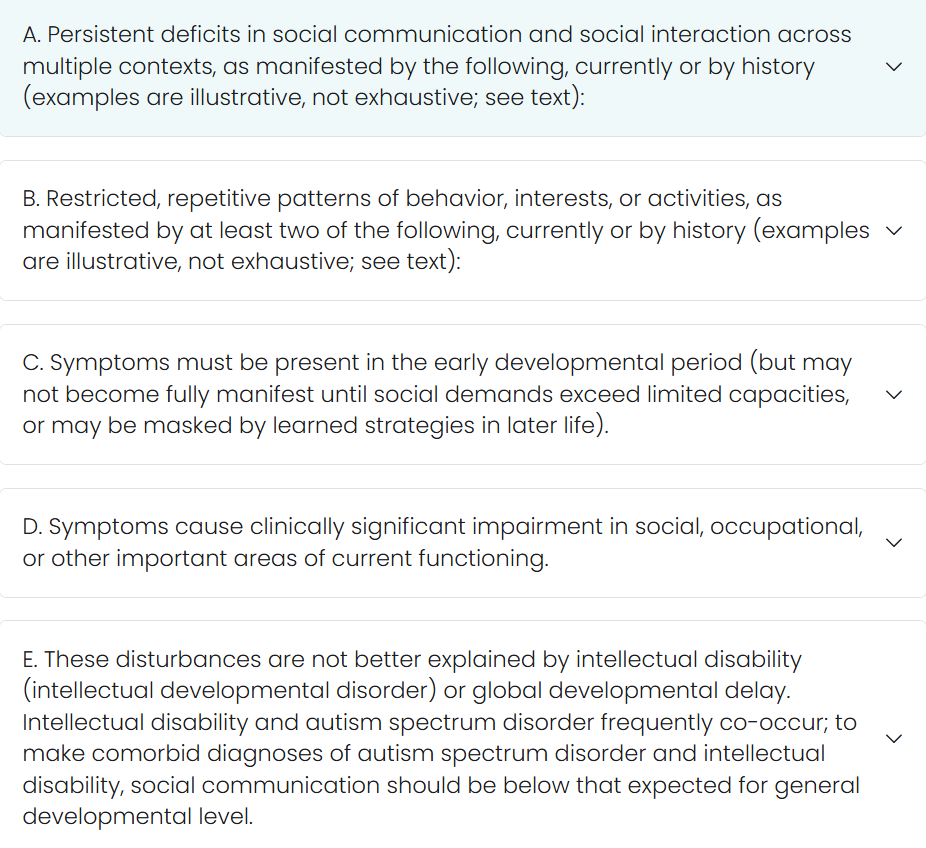
I didn’t meet any of these! (Humble-brag) I was one of the first people in my pre-school to make friends. I did not engage in “restricted, repetitive patterns of behavior,” and was, in fact, quite imaginative as a child—interested in characters rather than abstract structures. When my brother was little, he would play with Thomas trains by constructing long and elaborate lines of trains. When I was little, I would play with them by pretending they were having sustained interactions. (My friend, to whom I presented this argument, was not very moved because, in his words, an argument against autism can’t be persuasive if it begins with “when I had a deep obsession with trains…”).
I fall into the second camp. I think I pretty clearly don’t have autism. But what’s going on? Why is there such controversy? Why do so many people think I have autism? I set out to investigate—and do a Bayesian analysis.
